
A quiet Friday morning in late September, and an executive opens a browser tab. The screen refreshes, presenting an interface full of dials, bar charts, and percentages. For decades, leadership viewed this view through a single, narrow prism: Who showed up, and who didn't? The conventional perception persists that attendance tracking is merely an administrative ledger designed for payroll reconciliation. Yet underneath the clean counters and live counters, modern dashboards tell the unvarnished story of workplace culture, friction, operational bottlenecks, and employee fatigue long before any quarterly town hall or exit interview reveals them.
To manage people effectively, one must understand what that screen is actually revealing.
Understanding the Highs and Lows of the Overtime Curve
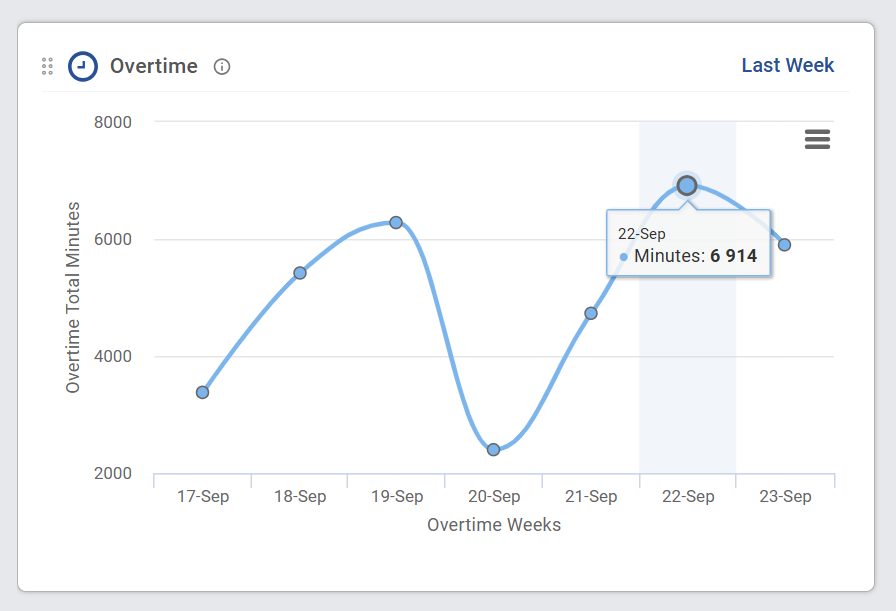
Overtime is frequently reviewed as a financial cost line: hours multiplied by standard overtime multiples. Consider the narrative mapped by an overtime line chart. A sharp climb beginning mid-week that peaks toward 6,914 cumulative minutes does not merely indicate productivity; it reflects operational load.
When department heads observe those minutes clustering tightly around specific weekdays, the data presents vital management questions such as is this extra effort driven by genuine business growth, or is a broken workflow forcing teams to compensate after hours? Or Why do numbers plummet immediately before surging again? Are teams oscillating violently between idle delays and chaotic sprints?
When sustained spikes in after-hours work go unnoticed, the consequence is rarely just an inflated wage slip – it is employee burnout. When leadership looks at an attendance dashboard, they are not examining clock tallies; they are monitoring team endurance.
Pending Requests
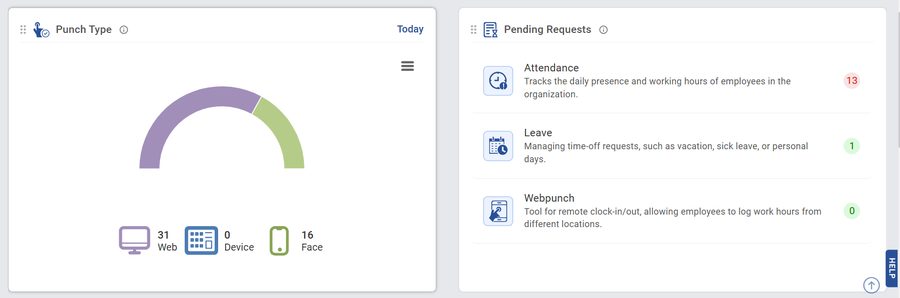
Every employee presence tracking interface features a corner reserved for numbers in red badges: Pending Requests. A panel showing 13 pending attendance regularizations alongside a single leave approval is not an indictment of team discipline; it is a direct mirror of management attentiveness.
When employees fail to clock in properly – often resolved through a standard miss punch regularization process – those adjustments sit on a supervisor’s desk waiting for approval. Every pending request lingering for days signals an unspoken message to the workforce: Your time, payroll accuracy, and requests are waiting behind my inbox.
Unapproved requests create anxiety around monthly salary deductions, distort daily attendance reports, and burden HR with manual disputes at the close of every billing cycle. The dashboard is not simply a monitor of worker attendance; it actively tracks how fast managers clear operational roadblocks for their teams.
Punch Types and Modes of Work
Hybrid and distributed work arrangements have complicated how presence is defined. An administrative overview that breaks down activity by punch type – highlighting 31 web punches, 16 facial recognition scans, and mobile check-ins – displays the operational distribution of an entire company in real time.
When remote logs fluctuate erratically or field personnel consistently miss web punches, the issue is seldom defiance. More often, it signals system friction: confusing login portals, inconsistent network coverage, or policy ambiguity. Viewing these channels in a single pane provides senior leaders with clear visibility into how policy translates into everyday practice. Rather than assuming non-compliance, leadership can adopt tools like self-attendance apps with geofencing that accommodate field reality instead of imposing friction.
The Human Rhythm Behind the Calendar
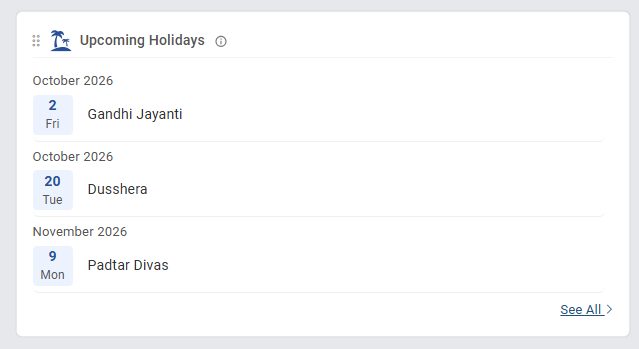
Beyond day-to-day discipline, presence tracking captures human cadence. Dashboards that display single-view upcoming holidays – such as Gandhi Jayanti or regional observances – remind leaders of natural workflow pauses.
Forward-thinking organizations monitor how leave requests gather around these breaks. Recognizing when employees plan extended downtime allows managers to implement fair casual leave policies and evaluate rules like sandwich leave policies without causing workplace friction.
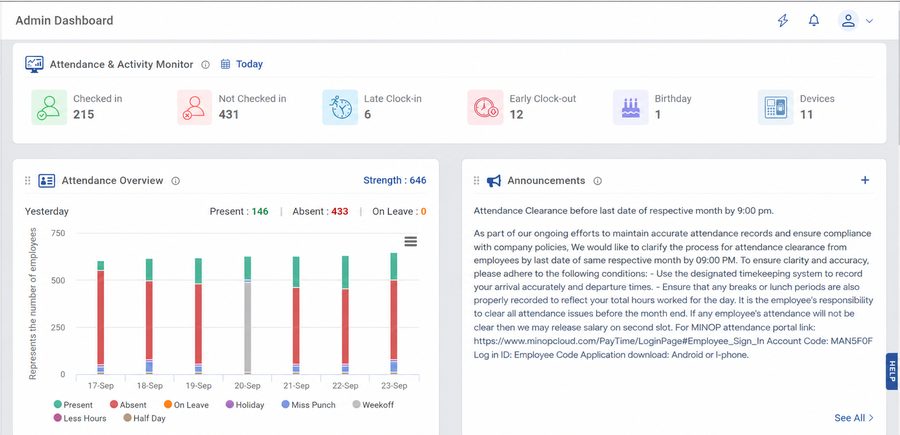
Even a solitary alert noting a team member’s birthday within an activity monitor provides a vital touchpoint. It serves as a subtle reminder that the system tracks individuals, not abstract resources.
Bottom Line
Over the past two decades, attendance architecture has evolved. From cards to fingerprint authentication, now with the help of face biometric reader, the strictness over time and attendance is getting better. Pure physical verification, reactive dispute handling, and zero operational insight. Localized finger sensors that solved time theft but kept management locked into post-facto spreadsheet auditing. Real-time visibility that connects daily work patterns directly to employee well-being, shift health, and leadership velocity.
Frequently Asked Questions
An attendance dashboard can reveal repeated late arrivals, early departures, absenteeism patterns, overtime trends, and changes in team availability over time.
HR teams can use attendance data, approval statuses, regularization requests, and overtime records to identify discrepancies before attendance information is passed to payroll.
Managers can compare overtime hours and cumulative work minutes across departments over time. Repeatedly high figures can indicate teams that may need workload or staffing reviews.
Managers can view attendance and absence information across teams to understand who is available, who is absent, and where staffing gaps may affect daily operations.
Pending attendance approvals can leave employee records incomplete and may affect payroll calculations, attendance reports, and workforce data.