TL;DR
An appraisal letter is the written record of where a performance review landed - rating, salary revision, and what comes next. It is not the same as an increment letter or a promotion letter, though Indian companies often combine all three into one document. In India specifically, it carries weight beyond internal HR records - banks, visa offices, and loan applications regularly ask for it as proof of income revision. This guide covers what the letter must include, how appraisal methods affect what goes into it, and what Indian-specific conventions HR teams need to get right.
What is an Appraisal Letter?
An appraisal letter is a formal written communication from a company to an employee that records the result of a performance review. It is issued at the end of an appraisal cycle and confirms outcomes like performance rating, salary revision, or promotion. It may also be called a performance appraisal letter or salary appraisal letter, depending on what the review covers.
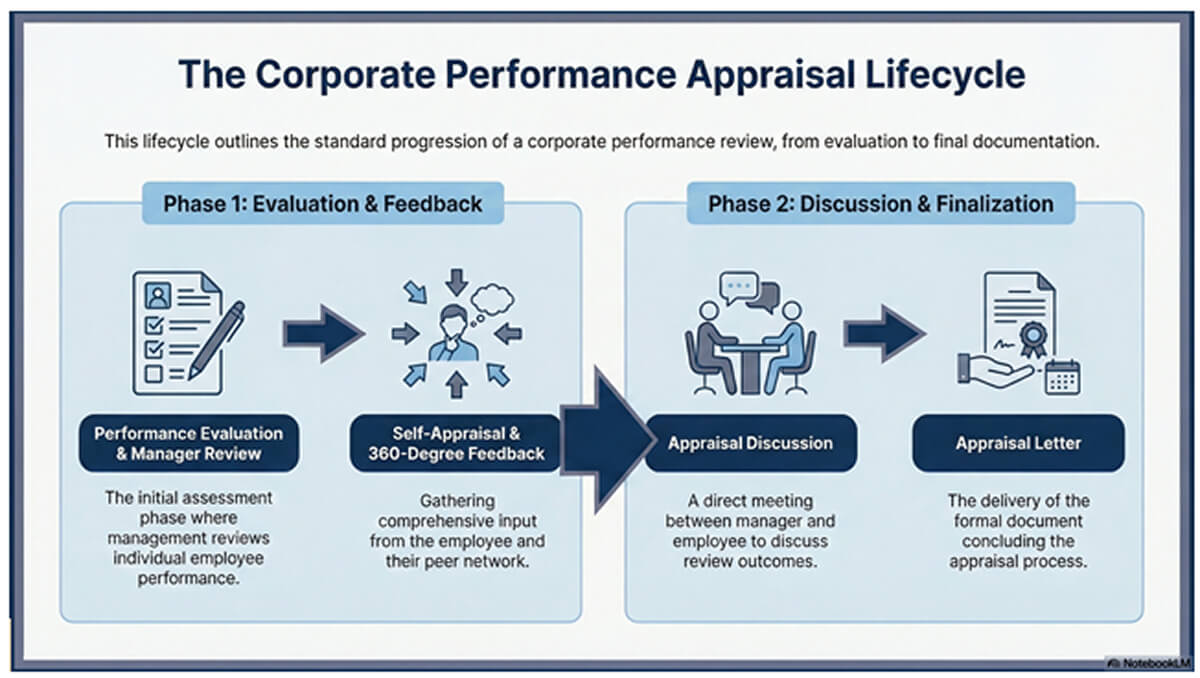
The letter sits at the end of a process. Before it is written, the company has usually completed self-assessments, manager evaluations, calibration meetings, and compensation reviews. The appraisal letter is not the process itself - it is the written record of where that process landed.
In simple terms: An appraisal letter tells an employee how they performed, what their revised salary is (if applicable), and what is expected of them next. It serves as an official HR document and is kept in the employee's personal file.
The letter matters for two reasons beyond recognition. First, it protects both the employer and employee if a salary dispute or employment decision is ever challenged. Second, it gives employees a concrete record they can use for future job applications, visa documentation, or bank loan processes in India - all of which commonly ask for an appraisal letter as proof of income revision.
The appraisal letter meaning extends beyond a pay-slip update. It combines two functions that HR teams often treat separately: evaluation and communication.
On the evaluation side, the letter documents how an employee performed against their KPIs (Key Performance Indicators), KRAs (Key Responsibility Areas), and any competency targets set at the start of the year. On the communication side, it translates those numbers and ratings into clear language - what the employee did well, where they fell short, what changes to expect in their compensation, and what is expected next.
When done well, an appraisal letter also functions as a record of the conversation that happened in the review meeting. It should not contain surprises. If the letter says something the employee has never heard before, the review process has a gap in it.
Also Read: Salary Slip Format India: Components & Free Templates Explained
Appraisal Letter vs Promotion Letter vs Increment Letter
These three terms are often used interchangeably in India, but they mean different things. Knowing the difference helps employees ask the right questions and helps HR issue the right document.
| Document Type | Includes Performance Review | Includes Salary Revision | Includes Designation Change |
|---|---|---|---|
| Appraisal Letter | Yes - always | Usually, but not always | No - unless it's a combined letter |
| Increment Letter | Sometimes referenced | Yes - always | No |
| Promotion Letter | Sometimes referenced | Yes - almost always | Yes - always |
Most mid-to-large Indian companies issue a single appraisal letter that folds in the salary revision and, if applicable, the promotion. Smaller companies sometimes issue them as separate documents to keep records cleaner for payroll and HRMS systems.
Also Read: Appointment Letter Format India: Samples & Templates
Techniques of Performance Appraisal
An appraisal letter can only be as accurate as the process that produced it. The quality of feedback in the letter depends heavily on which performance appraisal method was used. Here are the most common ones used by Indian companies today.
Manager Appraisal
The direct manager evaluates the employee based on daily observation, KPI data, and incident notes over the appraisal period. Simple to run, but relies heavily on the quality of the manager's notes throughout the year.
Self-Appraisal
Employees rate themselves against their targets before the manager review. Useful for identifying gaps in how the employee views their own performance versus how the manager sees it. Often used as a starting point for the review conversation.
360-Degree Feedback
Feedback is gathered from the employee's manager, peers, direct reports, and sometimes clients. Gives a fuller picture of behaviour and collaboration, especially for people manager roles. Widely used in Indian IT services and consulting firms.
Management by Objectives (MBO)
Goals are set jointly at the start of the year. Evaluation at the end checks how many were met, and to what standard. Works well for sales, operations, and project-based roles where outcomes are measurable.
Competency-Based Appraisal
Employees are rated against a defined competency framework - technical skills, communication, leadership, etc. Common in large organisations that want to link appraisals to a learning and development roadmap.
Continuous Performance Management
Replaces the single annual review with monthly or quarterly check-ins, ongoing goal updates, and real-time feedback. Platforms like Keka, Darwinbox, and Workday support this model. The formal appraisal letter is still issued at the end of each cycle.
Also Read: What is KRA in HR, and how is it different from KPIs?
Appraisal Letters in India - What's Different
Indian appraisal letters have a few specific requirements and conventions that differ from global templates. If you are adapting an international format or using a global HRMS, keep these in mind.
Financial Year Timing
India's financial year runs April 1 to March 31. Most large companies complete their appraisal cycles in January to March, with revised salaries effective from April 1. IT companies - including TCS, Infosys, Wipro, and HCL - are the most searched employers for appraisal letter formats in India and typically follow this April cycle. Some companies with a calendar year cycle run appraisals in December to January for a January 1 or February 1 effective date.
CTC vs Take-Home Distinction
Indian compensation letters must be clear about whether the figure stated is a gross annual CTC (Cost to Company) or an in-hand monthly figure. These are different numbers because CTC includes employer PF contributions, gratuity provisions, and other non-cash items. Employees often confuse the two. Stating "Annual CTC: Rs. 14,40,000 (in-hand salary will vary based on tax regime and deductions)" avoids the most common confusion.
Tax Regime Note
Since 2023-24, employees choose between the old and new income tax regime at the start of the financial year. Appraisal letters do not need to calculate tax, but a brief note that the revised CTC is subject to applicable income tax as per the employee's declared regime is good practice and reduces queries to the payroll team.
PF and Statutory Deductions
If the revised salary crosses the PF wage ceiling (currently Rs. 15,000 per month basic) for the first time, the employer PF contribution will be capped at Rs. 1,800 per month unless the company follows an all-inclusive PF policy. This should be addressed in the CTC breakup letter that accompanies the appraisal letter, not necessarily in the letter itself.
Digital Delivery is Standard
Most Indian companies now issue appraisal letters through HRMS portals such as Darwinbox, Keka, GreytHR, or Zoho People. The letter is available for download by the employee after the HR team uploads it. Physical copies are still issued for certain government-adjacent roles, PSU employees, and some traditional manufacturing companies.
Banks and Visa Offices Still Ask for It
Unlike in some markets, Indian banks commonly request an appraisal letter or salary revision letter when an employee applies for a home loan, car loan, or credit limit increase after a pay hike. Employees leaving for an international visa may also need it as proof of income. This means the letter needs to be professionally formatted and clearly show the current salary - not just reference a percentage change.
Also Read: CTC Meaning: Understanding the Gross Distribution Through Numbers
Conclusion
A good appraisal letter does one thing well - it tells the employee exactly where they stand. Performance rating, salary revision, what they did well, what to work on, and what is expected next. Use specific numbers over vague praise. State the CTC change clearly with an effective date. Set goals the employee can actually measure themselves against.
Frequently Asked Questions
An appraisal letter covers the overall performance review outcome - rating, salary revision, development feedback - and may or may not include a designation change. A promotion letter specifically announces a new title with expanded responsibilities and almost always includes a salary revision. Many companies issue a combined document that covers both.
Yes. Employees can raise concerns through their company's formal grievance or appraisal appeals process. The standard approach is to request a meeting with HR and the reporting manager, present specific examples that support a different rating, and submit a written dispute within the window stated in company policy - usually 5 to 15 working days from the date the letter is issued. If no appeals process exists, raising the concern directly with the HR head in writing is the recommended first step.
Yes. A digitally issued appraisal letter sent via official company email or through an HRMS portal is valid in India, provided it contains all required details and originates from a verified company domain or authenticated system. Banks and visa offices in India generally accept PDF copies downloaded from company HRMS portals as long as they carry the company letterhead, authorised signatures, and the employee's name and details.
For a standard salary increment, one page is enough. For a promotion or a letter that includes detailed feedback and a development plan, two pages is appropriate. Beyond two pages, the letter starts to lose focus. Supporting documents - CTC breakups, updated JDs, development plans - should be separate attachments rather than part of the appraisal letter itself.