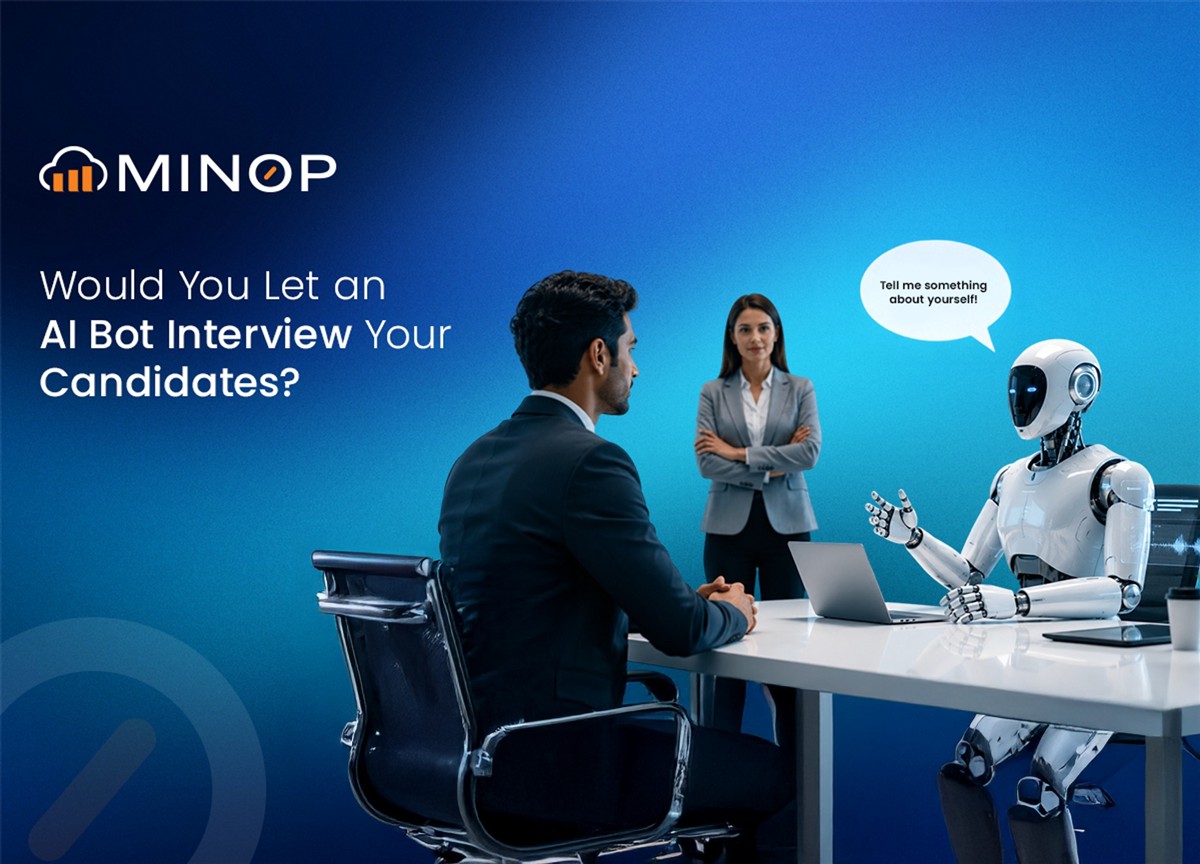
If you let a computer program make the final call on who gets hired, you are asking for trouble. You risk getting sued, unfairly rejecting great people, and watching top talent walk away. So, should an AI bot run your interviews from start to finish? The short answer is no.
But let's be real: you can't ignore the technology, either. Companies are drowning in resumes because it's so easy to apply to jobs using AI. To handle that massive pile of applications, you need AI to help with the busywork like scheduling, taking notes, and doing basic skill checks. It just shouldn't be the one judging a person's character.
Here is a plain-English breakdown of why having bots run interviews is a bad idea, how job seekers are actually cheating the system, and the legal rules you need to watch out for, backed by recent 2026 data.
Why Candidates Hate Bot Interviews
The push to have AI run interviews ignores a big problem: people don't like talking to machines.
Candidates are actively walking away from automated funnels. A May 2026 Greenhouse report (surveying nearly 3,000 job seekers) found that while 63% of applicants have now faced an AI interview, a massive 38% of them simply quit the hiring process because of it. Furthermore, an April 2026 survey by Enhancv showed that 50.5% of applicants were rejected without ever speaking to a human, leaving 64% feeling like a faceless algorithm decided their fate. When a company forces someone to talk to a camera with no human on the other end, candidates see it as a major red flag about the company's culture.
Second, bots are terrible at understanding normal human reactions. Most AI video tools use Facial Expression Analysis (FEA) to track your voice, eye contact, and facial movements. Imagine the video connection lags, and the candidate awkwardly laughs. Research in psychology shows that human expressions don't neatly map to emotions, a smile can mean politeness, stress, or genuine warmth. But the bot doesn't know that. It just sees a deviation from its training data, and it might flag that candidate as "emotionally unstable" or a poor communicator.
The Reality of Candidates Using AI to Cheat
Hiring managers constantly complain about candidates using AI (like ChatGPT) to feed them answers during live online interviews. And the problem is exploding. According to a March 2026 report by Fabric, which analyzed over 19,000 interviews, AI-assisted cheating jumped from 9% in mid-2025 to nearly 38.5% by early 2026. In fact, 83% of job seekers now admit they would use AI assistance to answer questions if they thought they could get away with it.
Tech-savvy candidates don't leave obvious clues. They use hidden software to overlay invisible teleprompters on their screens. They use real-time audio loopbacks so an AI can whisper answers directly into a bone-conduction earpiece while the interviewer is talking. Looking for eye movements or reflections just doesn't work anymore. In a famous experiment run by the hiring platform interviewing.io, zero out of 37 experienced human interviewers could detect when a candidate was secretly using ChatGPT during a live coding test.
When people know they can just look up an answer, they stop thinking for themselves. A famous study in Science magazine called this "cognitive offloading", when humans know a computer can remember something for them, their own problem-solving skills drop.
To find out if a candidate actually knows their stuff, recruiters need to change how they interview:
Offline Problem Solving:
Stop asking generic questions like "tell me about a time you overcame a challenge." Instead, give them a practical test or puzzle they have to solve in a secure, offline setting where their AI tools can't help them.
Ask "Why," Not Just "How":
An AI can tell a candidate how to do a task. A human interviewer needs to ask why they chose to do it that way. Making someone explain their thought process is the easiest way to spot who is reading an AI script and who actually has real-world experience.
The Legal Traps of Using AI
Using AI to screen candidates without human supervision can easily land a company in court. There are very real laws in place right now that punish companies for doing this wrong.
Illinois (BIPA):
One-way video AI tools scan faces and record voices. In Illinois, it is strictly illegal to collect this kind of biometric physical data without getting clear, written permission first. Just this month, in August 2026, the AI video interview platform HireVue agreed to a $3.75 million class-action settlement because they allegedly collected candidates' facial scans and voiceprints without proper consent.
New York City (Local Law 144):
If you use AI software to help decide who gets a job in NYC, the law says you must hire an independent group to test your software for unfair bias every year. But these audits are already proving flawed. A 2026 review showed that while NYC flagged only one company for non-compliance, State auditors looking at the exact same 32 companies found 17 of them were actually violating the rules.
Europe (The EU AI Act):
In Europe, using AI to manage workers or hire people is legally labeled as "high-risk" under Annex III of their new AI Act. If you use these tools there, you are forced by law to have heavy human oversight, strict data security, and detailed records of exactly how the AI was trained.
Where AI Actually Belongs
To handle a mountain of resumes without breaking the law or scaring off good people, companies need to treat AI as a helper, not the boss.
| Hiring Step | How Much AI to Use | How Much Human to Use |
|---|---|---|
| The Application | A lot. Let AI scan resumes, check basic certifications, and schedule calendar invites. | A little. Humans just need to set the rules for what the AI should look for. |
| Skill Tests | Medium. AI can be used to grade standardized math or coding tests using a strict answer key. | Medium. Humans need to double-check the AI's grading before tossing a candidate's application in the trash. |
| The Interview | Very little. AI should only be used to take notes and write down a transcript of what was said. | A lot. A real human needs to ask the questions, read the room, and make the final hiring choice. |
FAQs
No, it usually just changes how the process is unfair. It is true that an AI will ask everyone the exact same question in the exact same tone. But the way the computer grades the answers often unfairly punishes people whose brains work a little differently, people who speak with an accent, or people who just have a unique way of talking. Standardizing the questions doesn't fix a broken grading system.
Psychologists call this "cognitive offloading" which is letting a machine do the thinking for you. When candidates rely too heavily on AI to feed them answers during an interview, their actual brainpower and ability to think on their feet drops. They sound like robots because they aren't using their own reasoning skills.
Yes, in many places they do. Laws like the EU AI Act and New York City's Local Law 144 make it illegal to secretly use AI to grade job seekers. They require employers to tell you upfront so you have the chance to ask for a normal, human interview instead.